
Last updated November 24, 2026
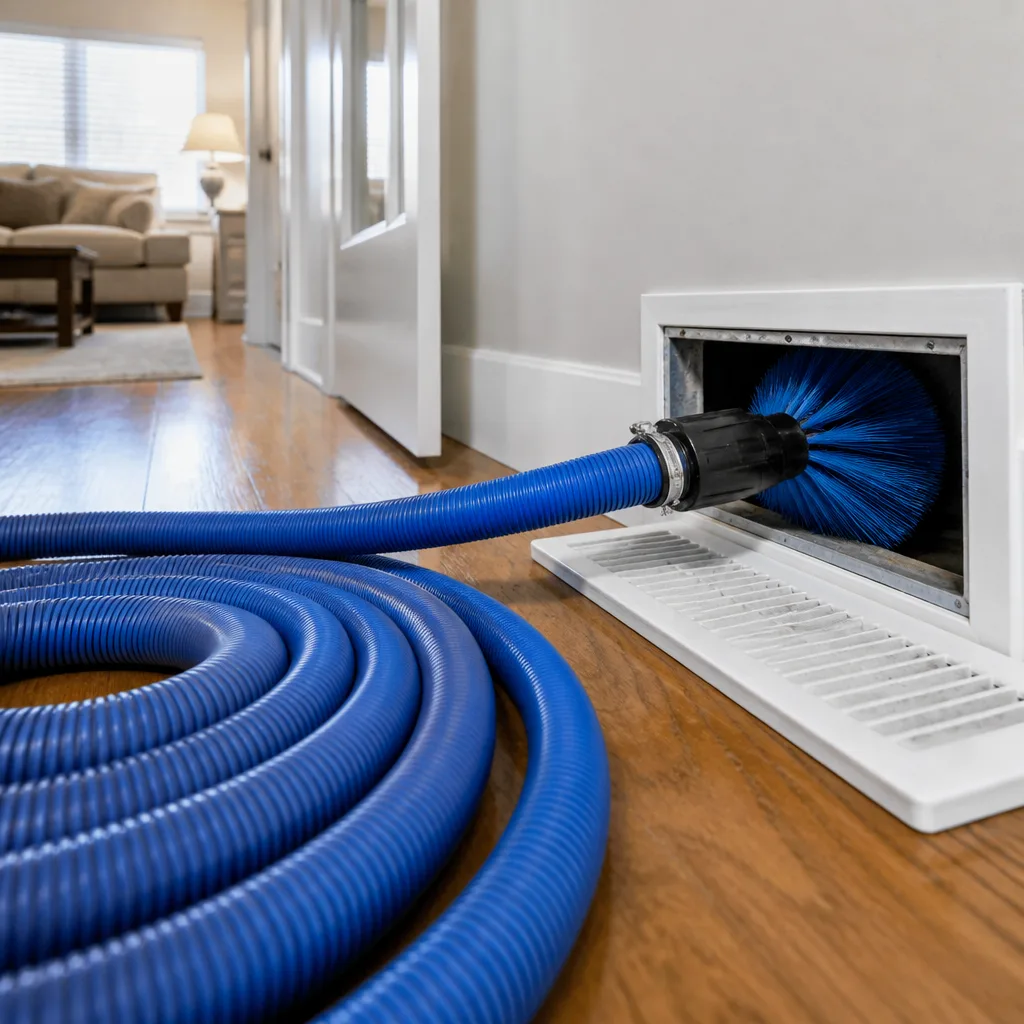 Whole-home duct cleaning
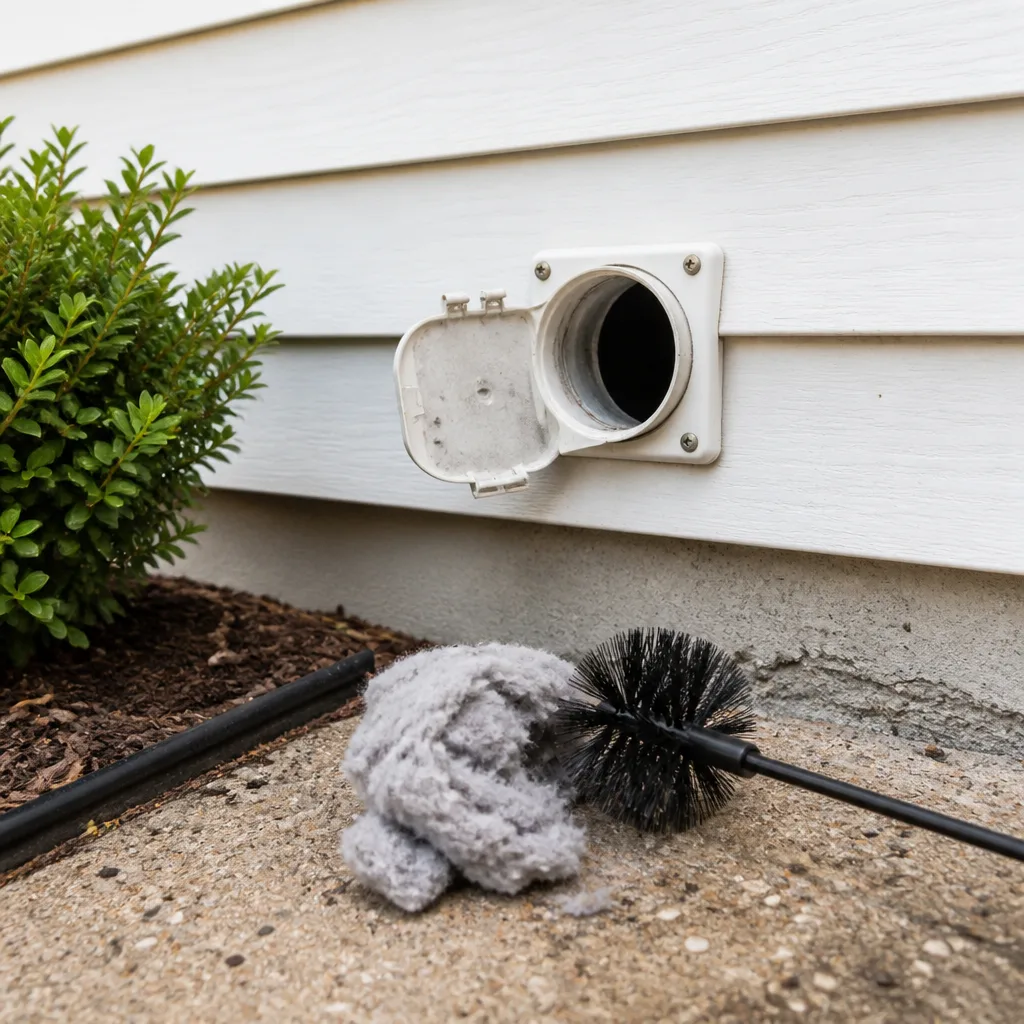 Dryer vent cleaning
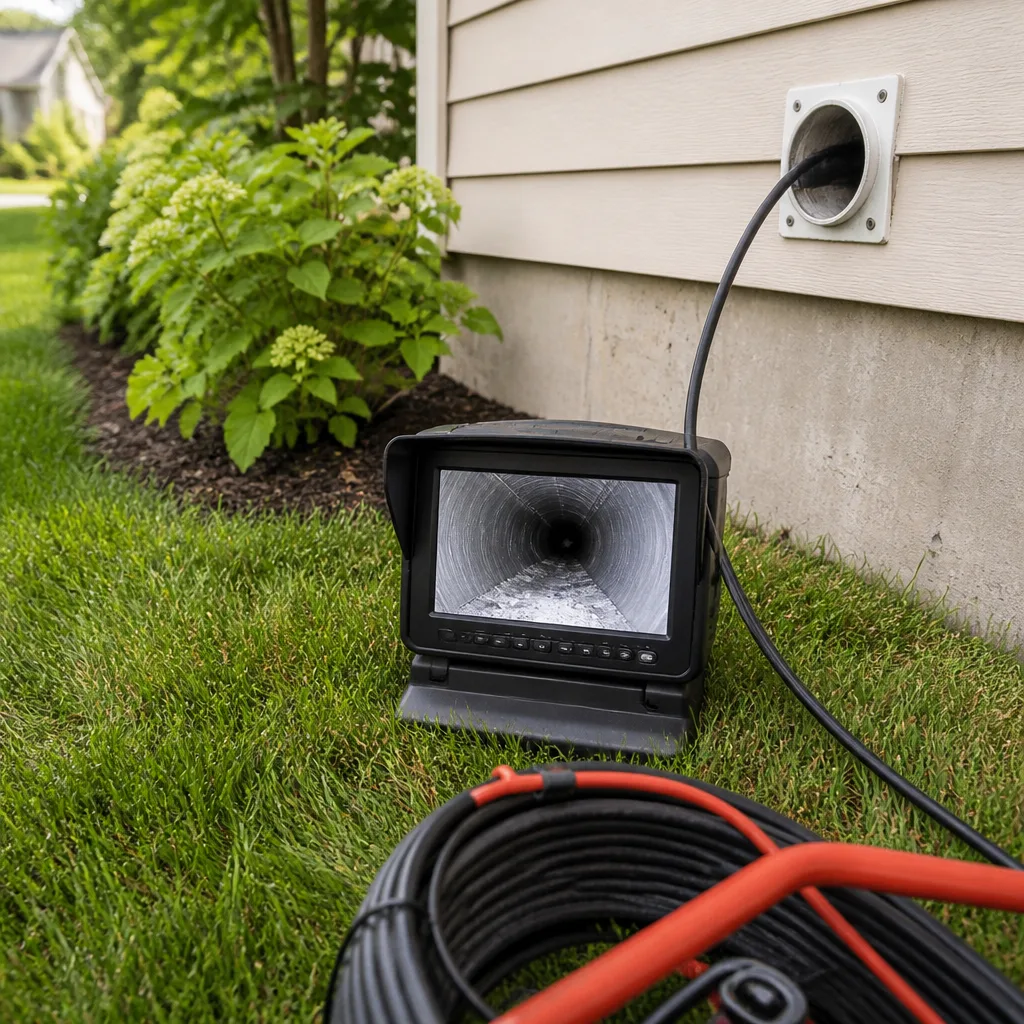 Camera inspection
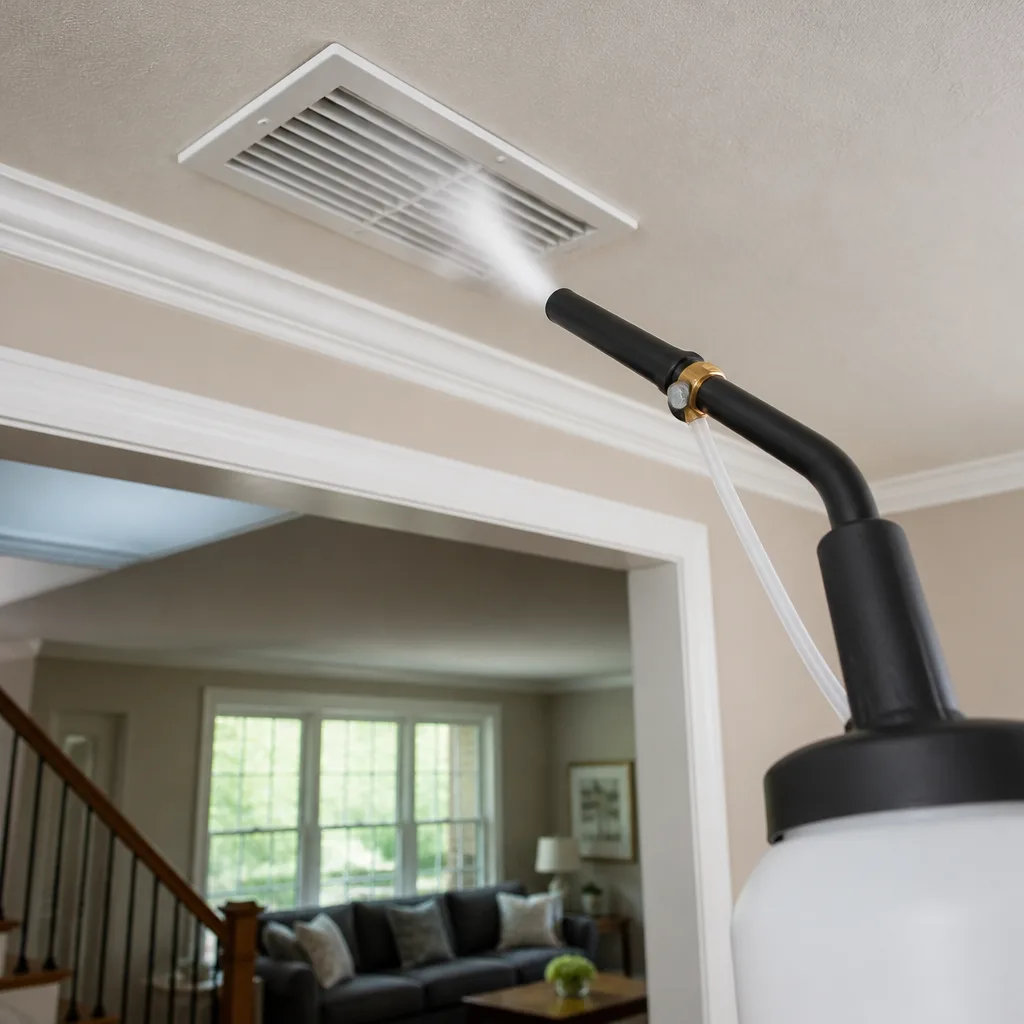 Sanitizing & deodorizing
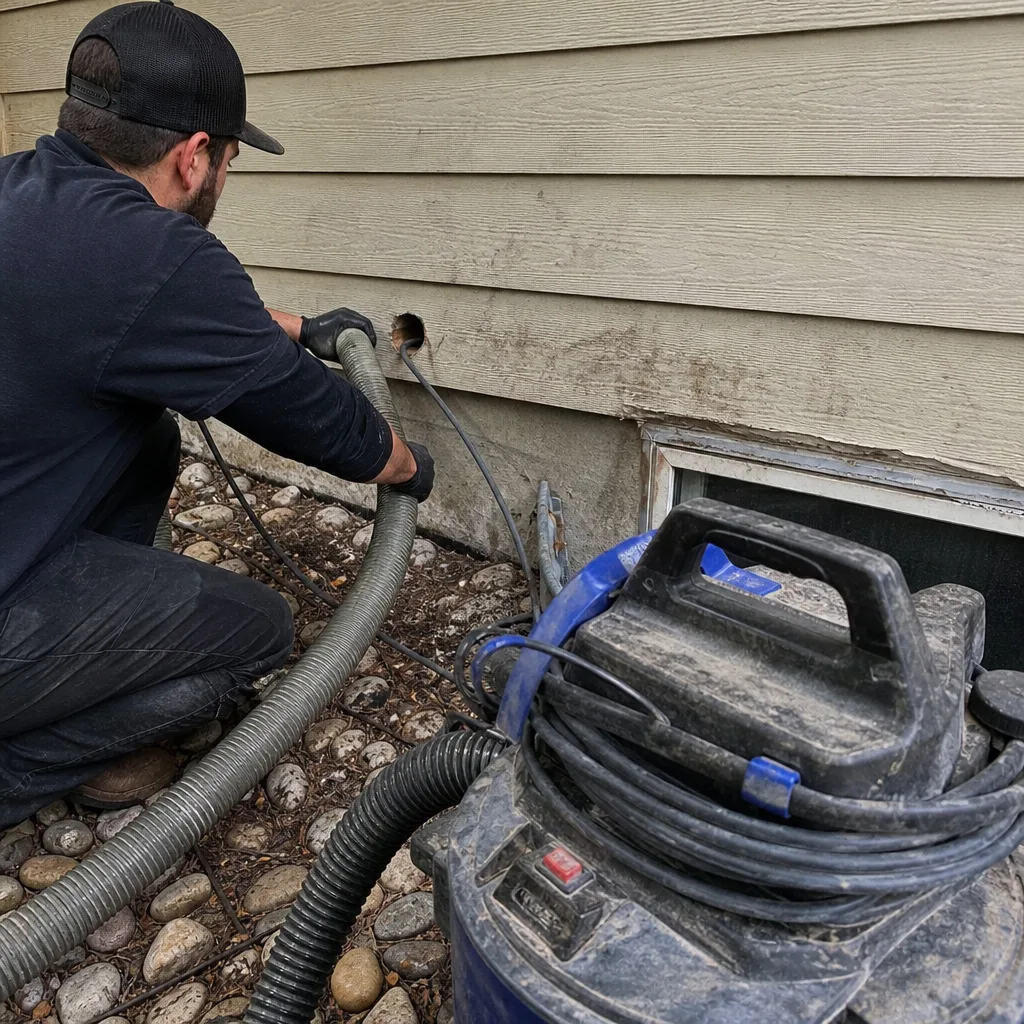
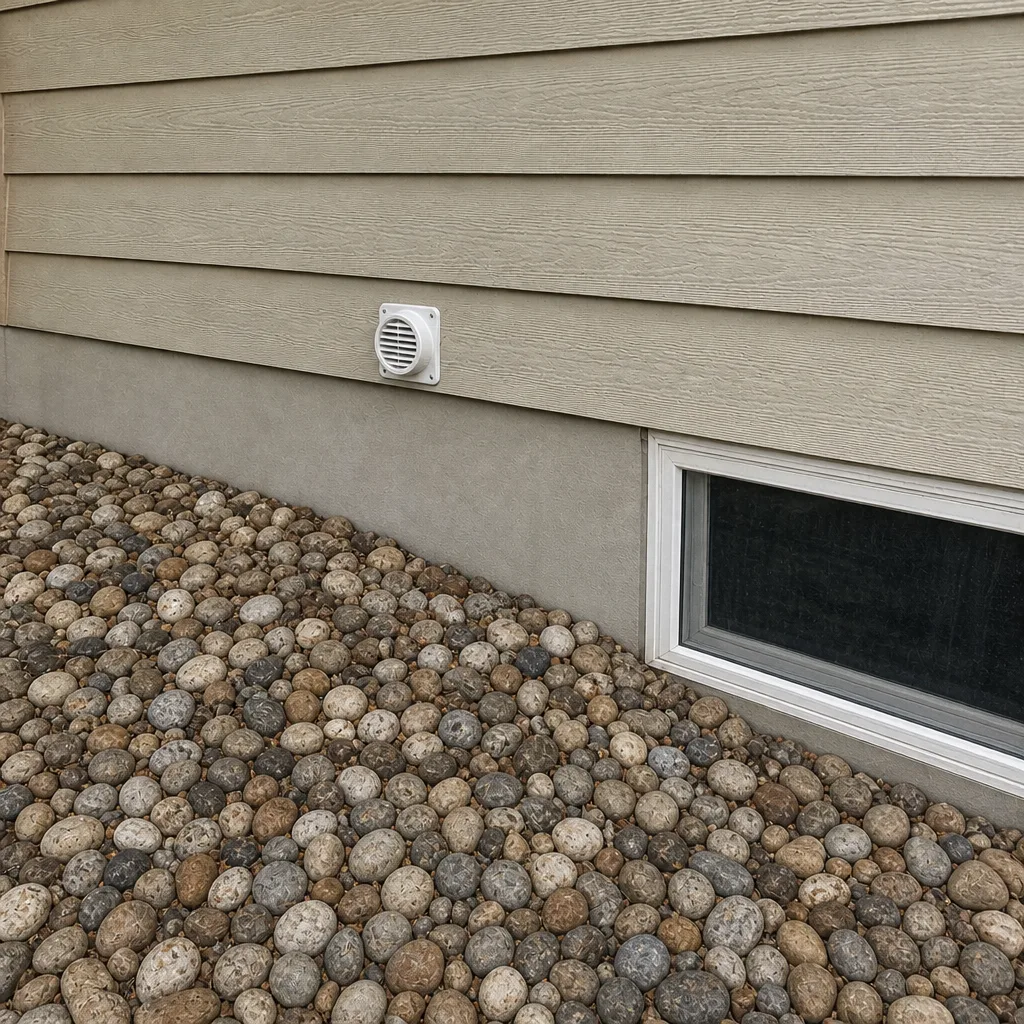
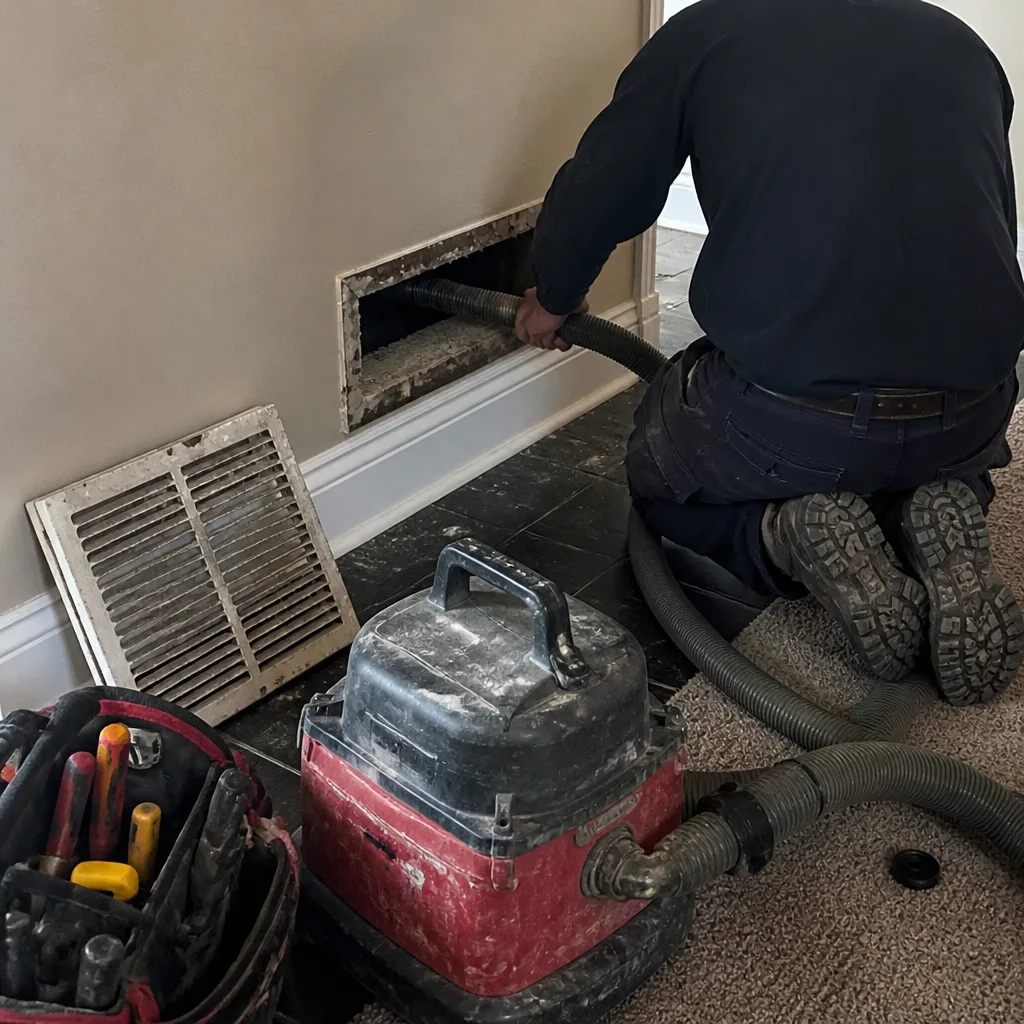
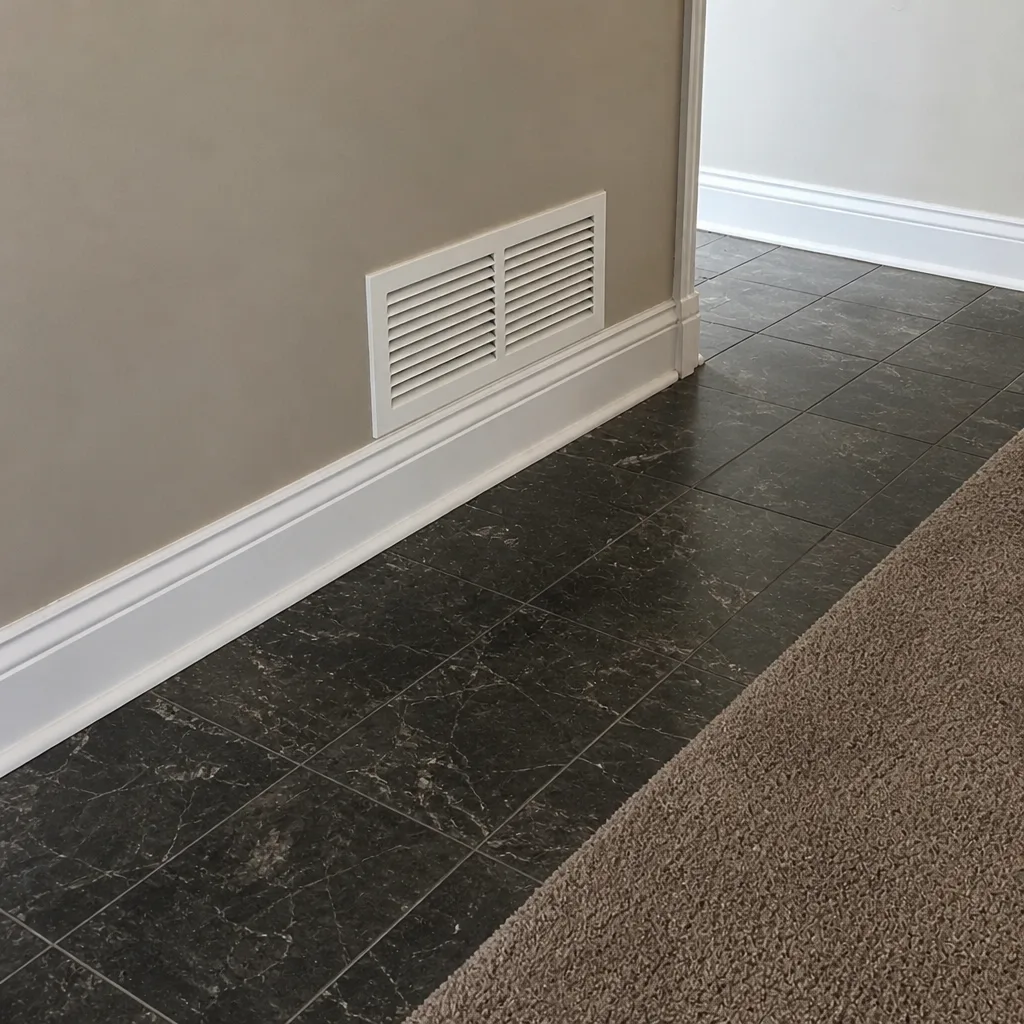
Whole-system duct and dryer vent check with before-and-after photos - you see exactly what came out of your vents
That "$99 whole-house special" is a bait ad - the real number appears once they are in your hallway, or the "clean" is a shop-vac at the register. We photograph the inside of your ducts before and after instead.
DIY vs Professional Air Duct Cleaning: The Murphy Creek Homeowner’s Decision Guide
Every consumer-grade duct cleaning kit sold online runs on the same basic idea: a shop vac, a long hose, a brush, and the power of a homeowner with a free afternoon. Here’s the part those kits don’t tell you. Most of them move roughly a tenth of the air volume a contractor’s negative-air machine pulls, and in a duct system, air volume is the whole game. Push less air than the debris needs to travel and it settles somewhere you can’t reach. This guide explains the physics behind that gap, the tasks you can genuinely handle yourself, and the honest cost math for Murphy Creek homes.
Quick Answer
DIY air duct cleaning makes sense only for light upkeep: vacuuming accessible grilles, wiping registers, and inspecting the dryer vent. Real cleaning of the inside of the ductwork requires professional negative-air equipment to pull debris out of the system without spreading it through your home. For post-construction debris, visible dust blowout, musty odors, or mold concerns, DIY will usually make the problem worse, and a professional cleaning is the safer and more economical call.
Styles & brands we work with
- Whole-home duct cleaning
- Dryer vent cleaning
- Camera inspection
- Sanitizing & deodorizing
Table of Contents
- The Physics of Negative Air: Why CFM Decides Everything
- What Homeowners Can Legitimately Do Themselves
- When DIY Makes the Professional Job Harder and More Expensive
- The Honest Cost Comparison for Murphy Creek Homes
- Murphy Creek New Construction: Construction Debris Changes the Math
- Clean Ducts Are Only Half the Job: Sealing, Repair, and Sanitizing
- How to Choose a Professional Duct Cleaning Company
- Common Mistakes to Avoid
- When to Call a Professional
- Frequently Asked Questions
The Physics of Negative Air: Why CFM Decides Everything
Air duct cleaning isn’t brushing. It’s airflow management. When a technician connects a negative-air machine to your trunk line, the machine pulls air backward through the duct system under a vacuum. Loose dust, drywall fines, and debris lift off the duct walls and travel toward the machine’s HEPA filtration and into a sealed collection bag. The brushes agitate. The vacuum carries. Remove the vacuum, and the brush just stirs the pile.
This is where the consumer-versus-contractor gap shows up in numbers. A typical wet/dry shop vac pulls a few hundred cubic feet per minute (CFM) at the hose, and that number drops sharply once you attach twenty or thirty feet of narrow hose, a brush head, and an adapter that doesn’t quite fit the register boot. A contractor-grade negative-air machine paired with professional rotary brush equipment runs at a much higher CFM and, just as importantly, holds static pressure through a full run of ductwork. Static pressure is the machine’s ability to keep pulling against resistance. Consumer equipment loses static pressure fast over distance. Contractor equipment is built to hold it.
What that means in a real home:
- High CFM plus high static pressure lifts debris from the far end of a branch run and carries it to a filter.
- Low CFM plus low static pressure lifts only what’s sitting near the hose, then drops everything else in the middle of the run.
- Worse still, a brush on a shop vac disturbs settled debris and redistributes it through the supply registers into the living space, which is exactly what homeowners are trying to avoid.
We’ve seen the same pattern in Murphy Creek homes repeatedly: a homeowner rents or buys a kit, spends an afternoon on it, and the next week the house is dustier than it was. That’s not a user error. It’s airflow carrying debris into the home instead of out of it. Our Air Duct Cleaning Murphy Creek team uses Rotobrush and Nikro equipment specifically because those systems are engineered to hold vacuum pressure through a whole house, not just a single register.
What Homeowners Can Legitimately Do Themselves
This isn’t a page telling you that everything requires a contractor. Several maintenance tasks genuinely belong to the homeowner, and doing them well extends the life of a professional cleaning. Here’s the honest list:
- Vacuum accessible registers and return grilles. Remove the faceplate, vacuum the visible boot with a brush attachment, and wipe it down. This removes surface dust before it gets pulled into the supply stream.
- Clean the return filter regularly. If your system uses a standard 1-inch filter, check it monthly and replace it per the manufacturer’s schedule. If you have a Honeywell or Aprilaire media cabinet, replace the media per its rated interval.
- Inspect the dryer vent exterior hood. Look for lint buildup, bird nests, or a damaged flapper. Never yank lint out far into the duct with a stick; that’s a professional job. Visual inspection only.
- Keep return registers clear. Furniture, rugs, and storage boxes blocking returns starve the system and force it to pull dustier air from leaky seams.
- Watch for changes in airflow and odor. Keeping a mental baseline for how your house normally feels helps you catch a problem before it gets expensive.
Notice what’s not on this list: running a brush twenty feet into a supply run, dismantling flex duct, or attaching a shop vac to a trunk line. Those tasks require professional air extraction to work, and they’re where DIY stops paying off. Professional air duct cleaning handles the inside of the system; the homeowner handles the surfaces and filters. That division of labor is honest and useful.
When DIY Makes the Professional Job Harder and More Expensive
A DIY attempt on a lightly dusty system usually just wastes an afternoon. A DIY attempt on a genuinely contaminated system causes damage that a professional has to undo before cleaning can even start. There are four scenarios where that’s the predictable outcome, and all four show up regularly in Murphy Creek.
1. Compressed debris in elbows and transitions
Duct systems have tight elbows, tees, and transitions where debris accumulates in dense, compacted layers. A homeowner brush hits the outer face of that pile and stops. A professional rotary brush spins against it at higher torque and higher vacuum, breaking it loose so it can be extracted. Push a stiff brush into a compacted pile without enough suction to carry the material out, and you compact it further. The professional then has to spend extra time breaking apart a pile that was already stuck before the visitation.
2. Disturbed mold and biological contamination
If there’s mold in the ductwork (we find it most often around cooling coils and the first few feet of the plenum in wet months), a shop vac doesn’t capture fine spores reliably. The typical consumer HEPA retrofit is a filter bag, and the exhaust is what matters. A negative-air machine exhausts through HEPA filtration at the machine, keeping spores out of your living room. Abatement Technologies equipment and protocols exist for this exact reason. When homeowners disturb visible mold with consumer equipment, they disperse it. The correct response to suspected mold is to stop, seal the register if you can, and call a professional.
3. Dislodged or crushed flex duct
Flex duct is common in newer builds and easy to damage from inside. A rigid homeowner brush snaking through a flex run can tear the inner liner or crush a sagging section, both of which cause leaks and air loss. A technician using proper tooling and inspecting with a camera avoids this. Repair and re-seal afterward is part of the job.
4. Debris pushed into the plenum or coil
This is the expensive one. Push debris backward toward the air handler and you can pack fines against the evaporator coil. The system then runs with restricted airflow, frosts up in summer, and needs a technician to correct. That’s a repair, not a cleaning, and it costs more than the cleaning would have.
The Honest Cost Comparison for Murphy Creek Homes
DIY kits exist in a wide band. Some setups cost a few hundred dollars; a real one with a powered rotary brush can run higher. The problem is that the kit you buy for one cleaning rarely gets used again, and it does a fraction of what a professional machine does. Here’s how the three paths actually compare. Pricing varies, so the ranges below are typical estimates; the written estimate from any professional sets the final number.
| Path | What You Get | Typical Cost | When It Makes Sense |
|---|---|---|---|
| DIY kit / rented equipment | Surface register vacuum, limited brush reach, low-CFM extraction | Low four figures for a powered setup; a rented or borrowed unit much less | Light upkeep only, no visible dust problem, no contamination concerns |
| Professional whole-system cleaning | Negative-air extraction, rotary brush agitation, HEPA exhaust, before-and-after photos | Moderate flat price per system, agreed in the estimate | Most homes once every few years; post-renovation; new build; confirmed dust or odor problem |
| Remediation after DIY goes wrong | Cleaning, coil assessment, possible duct repair or sealing, sanitizing | Higher than a straight cleaning | Compressed debris, disturbed mold, damaged flex duct, restricted airflow |
The math is rarely “the kit is cheaper.” The real math is “does a low-CFM attempt produce the result I need?” In our experience with Murphy Creek homes, a few hundred dollars spent on a kit that doesn’t extract is a few hundred dollars lost. A flat price per system, agreed before work begins, with before-and-after photos of your own ducts, gives you a verifiable outcome. That’s a fundamentally different purchase from a kit.
Murphy Creek New Construction: Construction Debris Changes the Math
Murphy Creek has seen a lot of new builds, and new construction is the one job where the DIY versus professional question isn’t even close. During construction, ductwork is open to the house while drywall installers sand, framers cut, and texture sprays. Fine drywall dust, wood shavings, and masonry grit settle into the ducts. The amount is often heavier than a typical homeowner expects.
Construction debris is hard to remove passively. Drywall fines are fine, loosely accumulated, and behave more like powder than like dust bunnies. A shop vac with a long hose moves too little air to pull that material off the top of a trunk line, and pushing it toward the coil is a real risk. A negative-air machine pulls it in bulk. A rotary brush handles the compacted piles that form at the plenum and elbows.
Post-build cleaning also has to be done in the right order:
- Protect the system. HVAC equipment should be isolated or run on a temporary filter while construction dust is present. If your builder hasn’t done this, do it before you run the system.
- Clean before you seal. Debris removal comes first. Sealing leaks after cleaning makes sense; sealing before cleaning leaves debris trapped in the seams.
- Check the coil and plenum. Construction fines collect at the evaporator coil. A proper visit includes a look, not just a pass with a hose.
- Replace filters afterward. A fresh filter after the cleaning completes the job, not before.
That sequence is worth repeating to any contractor you consider for a new build. The right answer includes it automatically, and the reason is that construction dust is denser and more abrasive than normal household dust. Running a new system with construction debris for years is hard on the blower motor and rough on the coil.
Clean Ducts Are Only Half the Job: Sealing, Repair, and Sanitizing
Here’s what a DIY kit can never do, no matter how much air it moves: it can’t seal a leaking joint, replace a crushed section of flex, or sanitize a system with biological contamination. This is why a cleaning alone doesn’t always solve the underlying problem. A duct system with leaky seams loses twenty to thirty percent of the air it pushes before that air ever reaches your rooms. The system runs longer and the home gets dustier, and cleaning is a temporary fix if the leaks remain. Professional duct repair and sealing closes that loop.
Our approach reflects the full system rather than a single task. Our five core services are:
- air duct cleaning for the supply and return system, using negative-air extraction and rotary agitation
- dryer vent cleaning, treated as a standalone safety service rather than an upsell, because lint buildup is a fire concern
- HVAC cleaning, which addresses the air handler, coil, and blower rather than just the branch runs
- duct repair and sealing, so the cleaning result holds and the system stops losing air
- air quality and sanitizing, using Abatement Technologies equipment and Guardsman products for contaminant control
We also work with the brands your system already depends on. If your home has a Honeywell or Aprilaire media cabinet, filtration and humidity control are part of the same conversation. A complete air-quality result treats filtration, humidity, and duct cleanliness as one picture, not three separate purchases. That’s the practical reason to involve one contractor for the entire ventilation system rather than coordinating a cleaner, an HVAC tech, and a duct repair company across three visits. Our technicians have up to 8 years of experience, and that experience shows up most in the diagnosis step: knowing whether the real problem is debris, a leak, or a moisture source changes the plan entirely.
How to Choose a Professional Duct Cleaning Company
If you’re hiring a professional, the questions you ask at the estimate stage tell you most of what you need to know. The right company is comfortable answering all six of these.
- What equipment do you run? Look for named, contractor-grade negative-air equipment (Rotobrush, Nikro, or comparable professional systems) rather than a “shop vac with a hose.”
- Is the price flat per system, or per vent? A per-vent price rewards adding vents, not cleaning them thoroughly. A flat price per system, agreed in writing before work starts, is the fairer structure.
- What happens to the exhaust? It should pass through HEPA filtration at the machine, not vent into the room you’re standing in.
- Will I see before-and-after photos of my own ducts? This is a small ask and a strong indicator of accountability.
- Can you fix a leak or a damaged run if you find one? A company that only cleans has no plan for the leak it finds. Repair and sealing capability matters.
- How do you handle mold? The answer should involve containment and appropriate abatement equipment, not a spray bottle of sanitizer.
Also ask about licensing and insurance for the local professional performing the work. The licensed technician you work with is licensed and insured as their state requires. Any company that is vague on that point is telling you something.
Common Mistakes to Avoid
- Running a shop-vac setup on a system with visible dust blowout. That’s the exact scenario where low CFM redistributes debris into the home. If you can see a dust puff from a register, stop and call a professional.
- Choosing a quote on price alone. A very low quote usually means a short visit, a small machine, and per-vent add-ons. A flat price per system, agreed before work, is the comparison you should make.
- Skipping the dryer vent. Murphy Creek homes have long dryer runs in many layouts, and lint accumulation in a long run is one of the more common fire hazards we address. It’s a safety inspection, not a cosmetic cleaning.
- Sanitizing before cleaning. Spraying sanitizer on a dirty duct spreads contamination instead of removing it. Cleaning comes first, always.
- Ignoring the filter after a cleaning. A fresh filter after the cleaning completes the job. A dirty filter reintroduces the material you just paid to remove.
- Running the system during a renovation without temporary filtration. In a new build or remodel, construction dust will enter the ducts unless the system is protected. A temporary filter and a post-build cleaning are the right sequence.
- Assuming the ducts are clean because the house “smells fine.” Returning air comes from an attic or crawlspace, not the living room. The absence of odor doesn’t tell you the ducts are clean; it tells you the dust hasn’t reached a register yet. If you do notice a musty smell, mention it when you call.
When to Call a Professional
Not every home needs a visit, but several situations should end the DIY conversation. Call a professional if the ducts haven’t been cleaned in years and you’re seeing visible dust blowout from registers, if a renovation or new build has just finished, if you notice musty odors when the system starts, if anyone in the house has allergies or asthma that seem worse at home, or if you’ve just moved into a Murphy Creek home and don’t know its cleaning history. Similarly, if your dryer vent hasn’t been checked, that’s a safety call rather than a comfort one. Air Duct Cleaning Murphy Creek offers free estimates in Murphy Creek. Call (855) 658-5202. We answer 24/7. Fast dispatch from 7am to 7pm, Sunday through Friday.
Frequently Asked Questions
It’s worth it for surface upkeep: vacuuming accessible registers, cleaning returns, replacing filters, and visually inspecting the dryer vent hood. It is not worth it for the inside of the ductwork, because consumer equipment can’t generate the negative pressure needed to remove debris rather than redistribute it. Call (855) 658-5202 for an exact quote if you’re unsure which situation you’re in; estimates are free.
Air duct cleaning in Murphy Creek is typically priced as a flat rate per system, agreed in the written estimate before work starts. The exact number depends on system size, the number of runs, and whether repair, sealing, or sanitizing is needed. We give a written estimate that sets the final price, so there’s no per-vent surprise. Call (855) 658-5202 and we’ll walk through your system with you.
Cheap quotes usually reflect a short visit with a small machine, per-vent pricing that grows as the technician walks the house, or both. A professional cleaning requires the time to agitate every run and the equipment to hold vacuum pressure through the whole system. Ask what machine the company uses by name, and ask whether the price is flat per system or per vent. That one question separates the quotes quickly.
Ask for before-and-after photos of your own ducts, and confirm what equipment the technician is running before they start. A crew willing to document the result and answer equipment questions is a crew you can verify. We photograph before and after on every visit, and that’s a simple thing to ask of any company you hire.
Most Murphy Creek homes benefit from a professional cleaning every few years, not annually. New builds and post-renovation homes are the exception and should be cleaned once the work is complete. Homes with allergy sufferers, pets, or recurring dust issues sometimes want a closer interval; that’s a conversation worth having at the estimate rather than a fixed schedule.
Yes, in four predictable ways: compressed debris in elbows, disturbed mold, crushed flex duct, and fines packed into the plenum or evaporator coil. The fourth is the costly one, because it turns a cleaning into a repair. If you’ve already tried a DIY kit and the system now runs with less airflow, mention that when you call so we check the coil and blower, not just the branches.
Yes. Our sanitizing and abatement work uses Abatement Technologies equipment and Guardsman products designed for contaminant control, and we clean before we sanitize. If you suspect mold, don’t run a shop vac through the system first. Call (855) 658-5202 and we’ll plan a visit that starts with containment.
The Bottom Line
The DIY versus professional question comes down to one thing: whether the equipment can actually move debris out of the duct system. Consumer kits don’t generate the negative pressure needed, so a DIY attempt on a genuinely dirty system usually redistributes what it disturbs. Handle the filters, the registers, and the visual dryer vent checks yourself. Bring in professional equipment for the inside of the system, especially after a new build or renovation, and expect a flat price per system rather than a per-vent quote. Before-and-after photos of your own ducts tell you whether the job was done. If you want a straight answer on your own system, call us.
Air Duct Cleaning Murphy Creek provides five core services across Murphy Creek: air duct cleaning, dryer vent cleaning, HVAC cleaning, duct repair and sealing, and air quality and sanitizing. Our technicians have up to 8 years of experience, and we use Rotobrush and Nikro equipment and work with Honeywell, Aprilaire, Abatement Technologies, and Guardsman products. For a free estimate, call (855) 658-5202. We answer 24/7. Fast dispatch from 7am to 7pm, Sunday through Friday.
Written by the team at Air Duct Cleaning Murphy Creek.
See the difference
 Before
 After
 Before
 After
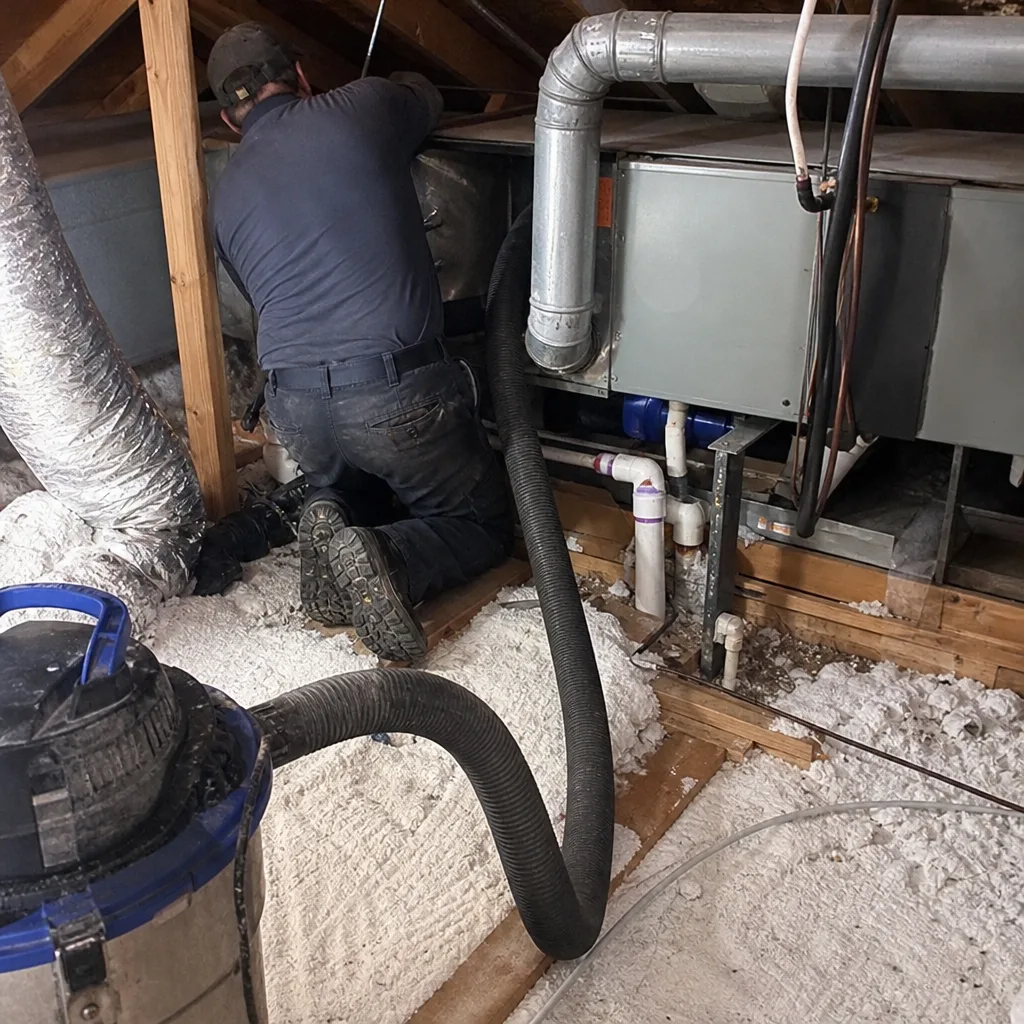 Before
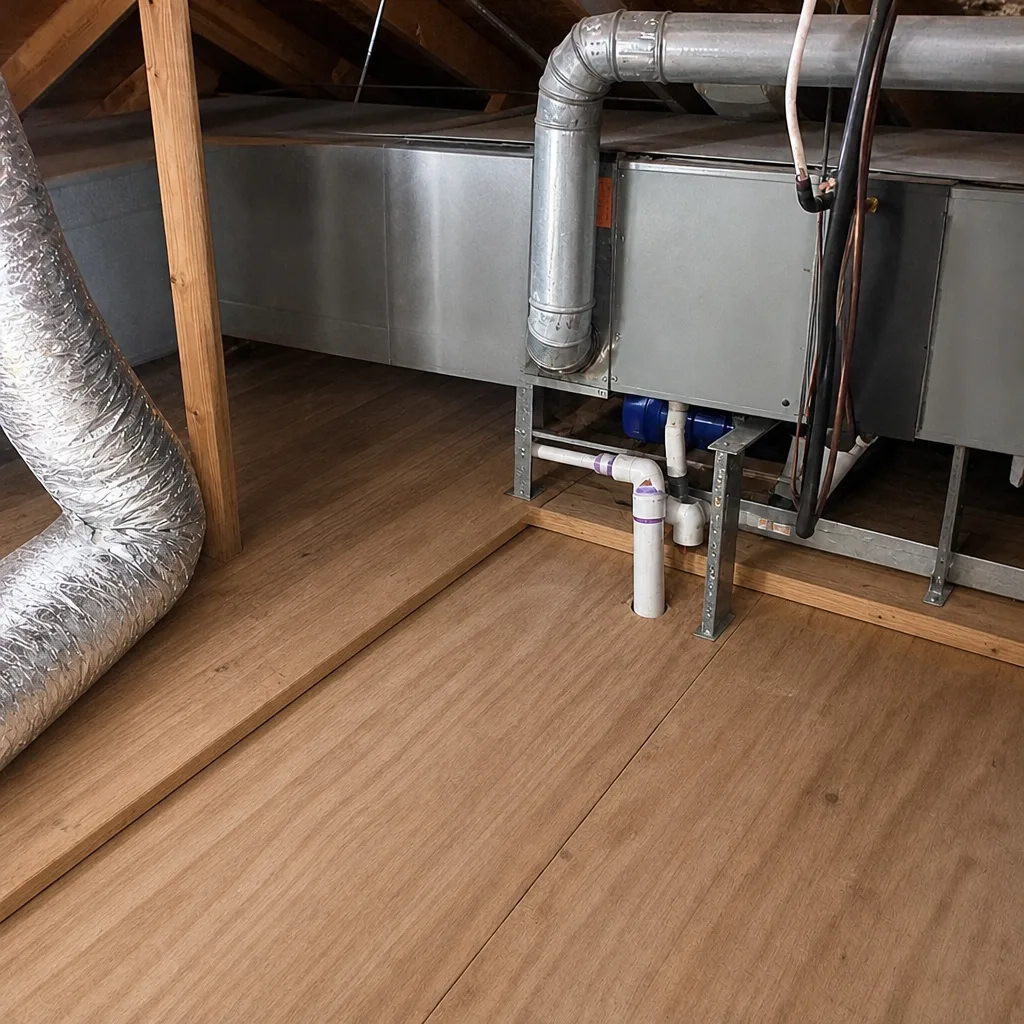 After